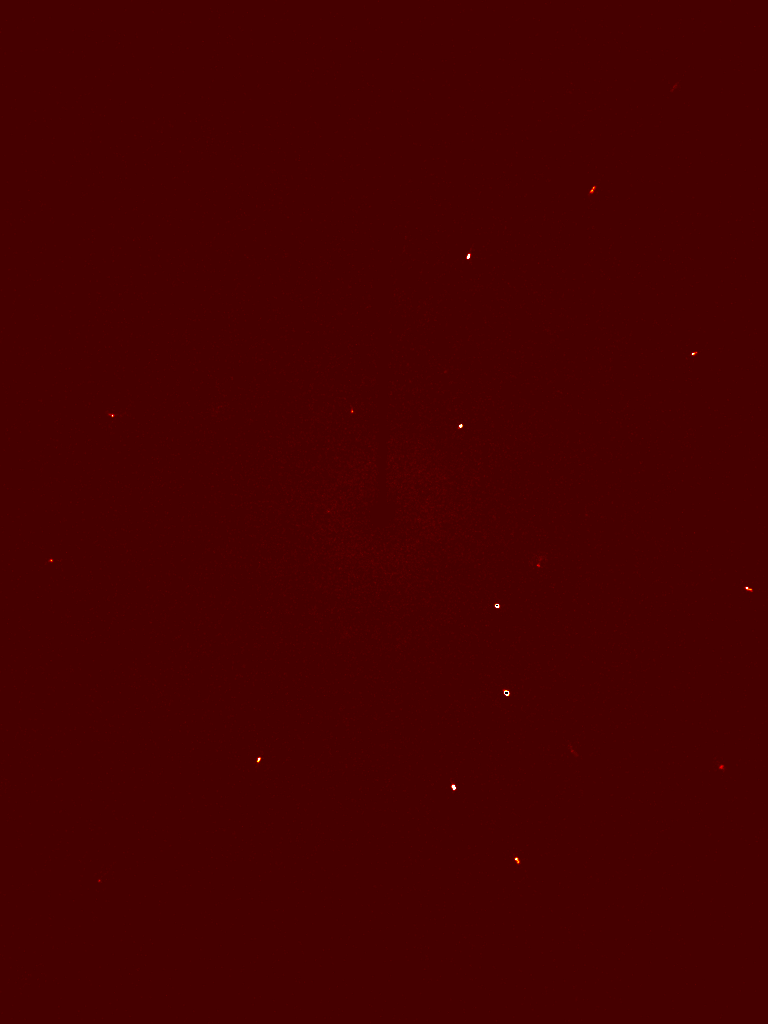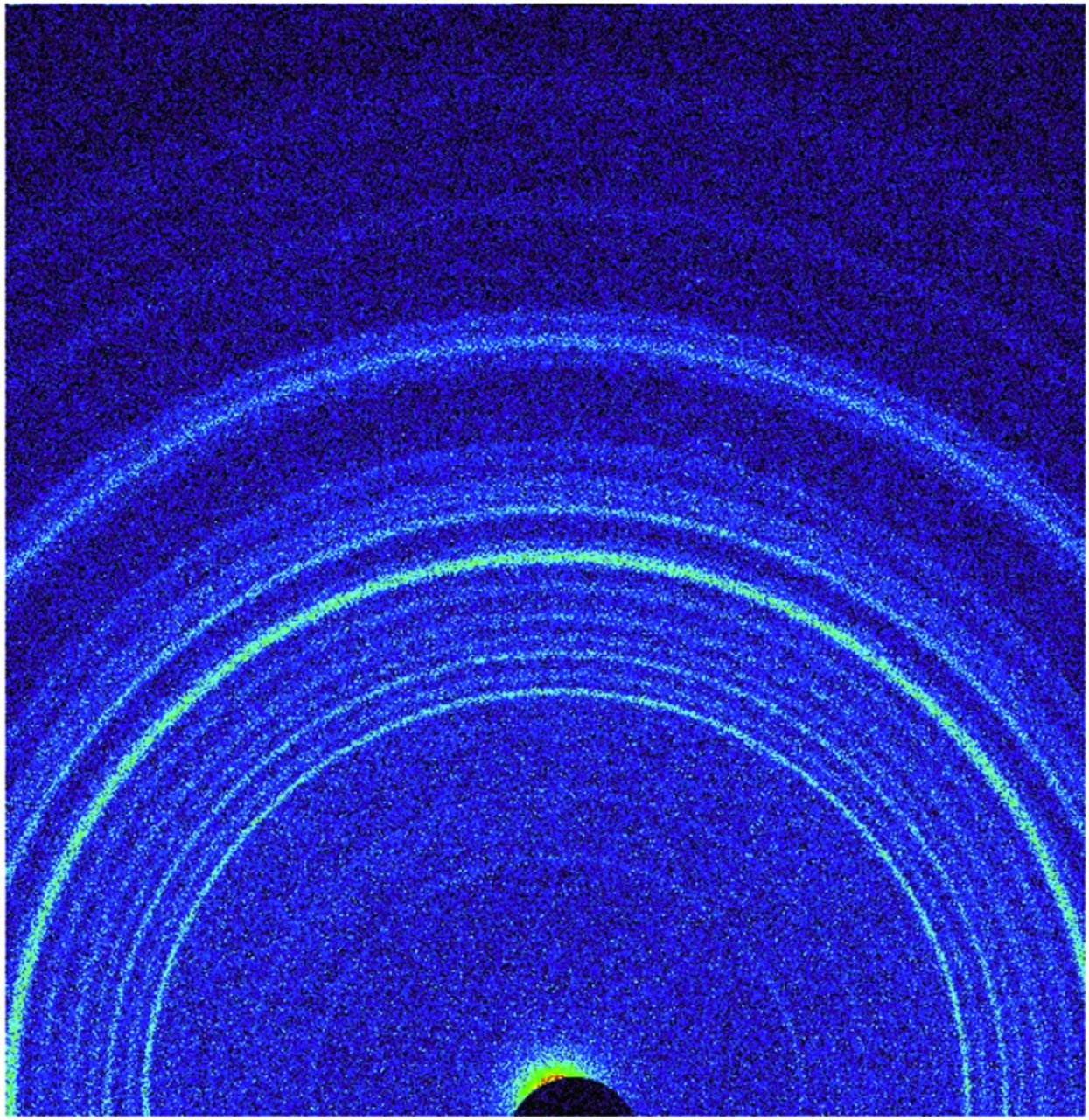
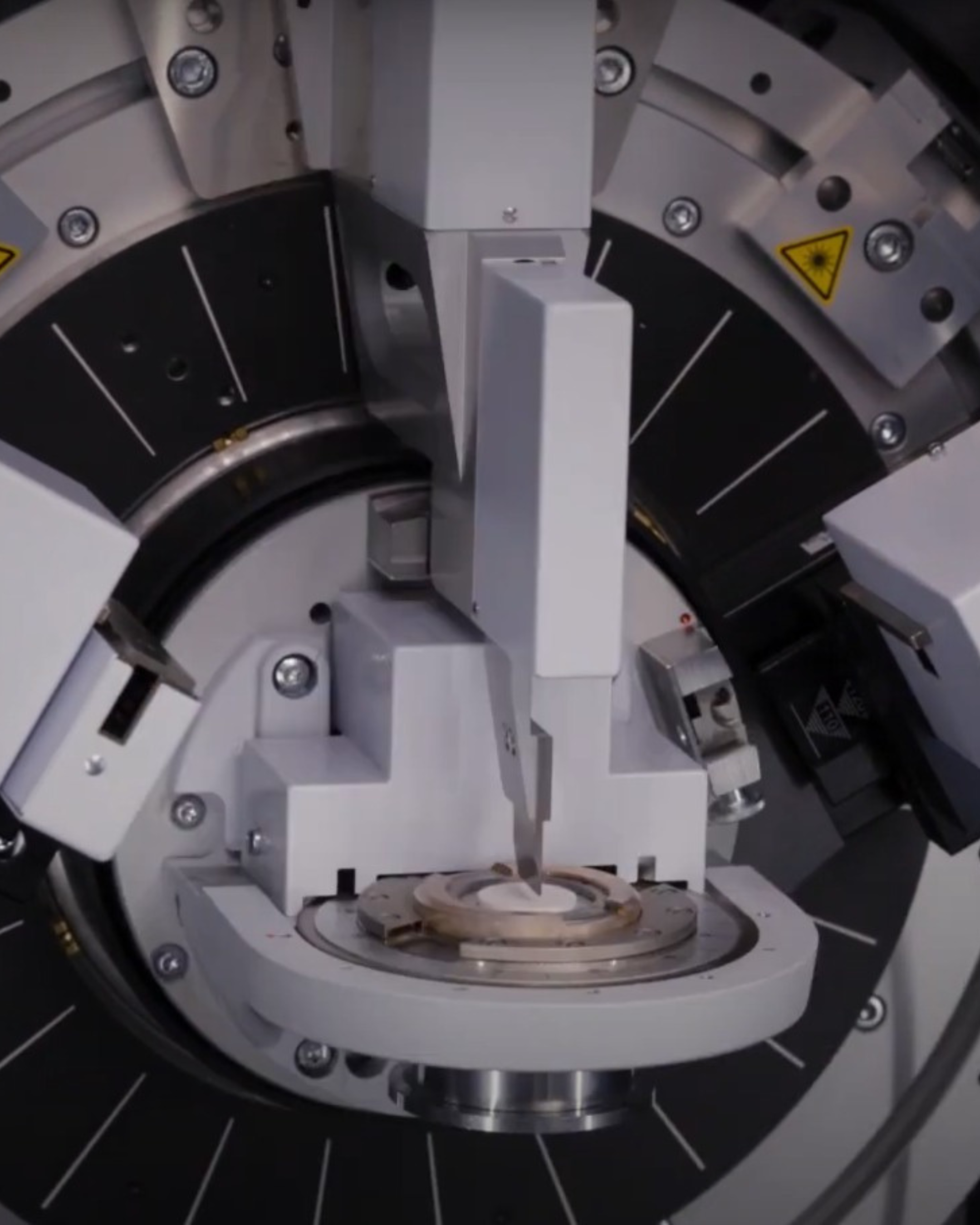
Baskerville X-ray provides expertise in soils, clays and mineralogical samples using X-ray diffraction
Advanced Rietveld, full quantitative analysis.
Working with Baskerville X-ray
The simplest route is to send your existing diffraction data directly. We accept raw files in their native formats and return a full quantitative report, typically within five working days. No shipping, no sample preparation delays.
If you do not have access to diffraction facilities, we manage the full process. Samples are prepared and collected through accredited partner laboratories, with analysis and reporting handled by Baskerville throughout. You receive one report and one point of contact.
In either case, the first step is a short conversation about your sample type and what the data needs to answer. Use the contact form below to get started.
Clay mineralogy is the thread. XRD is the method.
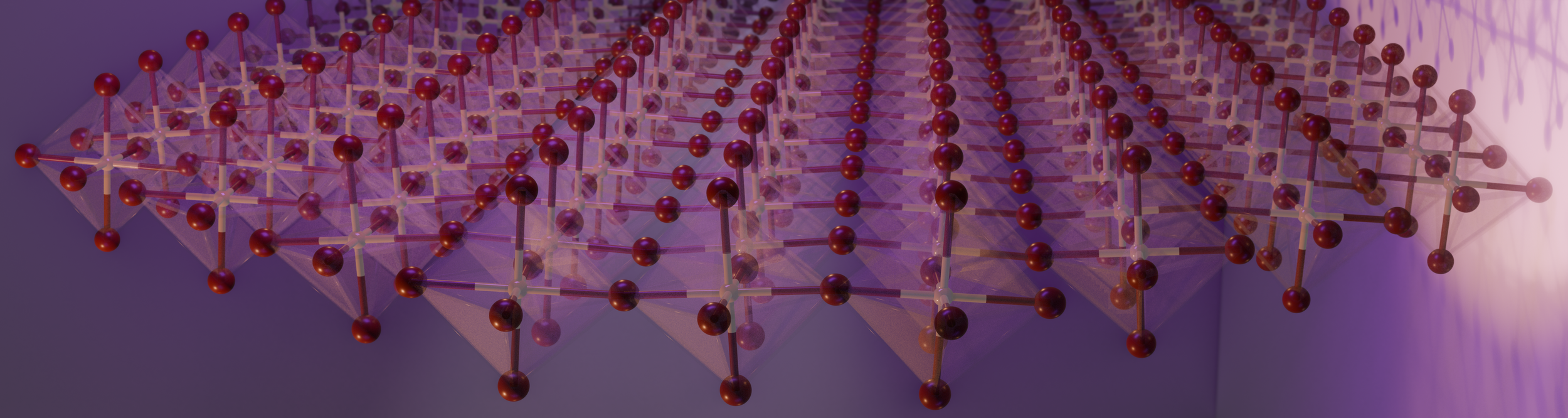
Clay minerals are layered crystalline materials, and their structure determines how they hold and release ions. A smectite with wide, hydrated interlayers behaves differently from an illite whose interlayers are collapsed around fixed potassium, and differently again from a kaolinite with no interlayer spacing at all. These differences govern cation exchange capacity, nutrient availability, and the response of a soil or geological formation to whatever is applied to it or extracted from it. Bulk chemical analysis tells you what elements are present. XRD tells you what structures those elements are organised into, and structure is what determines behaviour.
Our director holds a PhD from the University of St Andrews in the crystallography and structural characterisation of microporous and layered materials. Zeolites and clays share the same underlying aluminosilicate chemistry; both systems control ion exchange, selectivity, and the kinetics of uptake and release through their layer structure and interlayer chemistry. That background informs every problem we analyse, whether the sample is a drill core from a laterite deposit, a clay fraction from an agricultural soil, or a mixed-phase ore requiring accurate quantitative phase analysis by Rietveld refinement.
Our Director, Dr. Morris
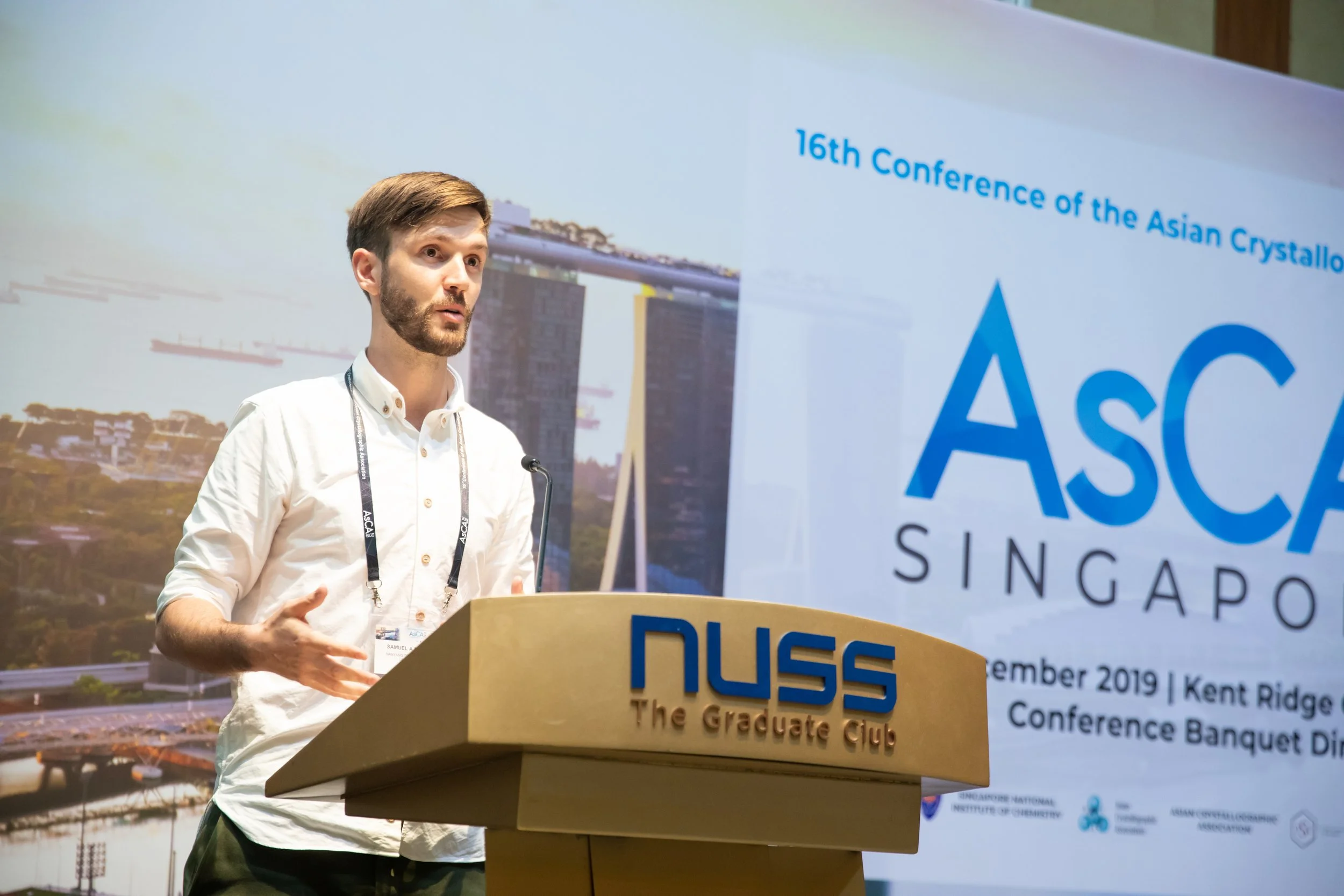
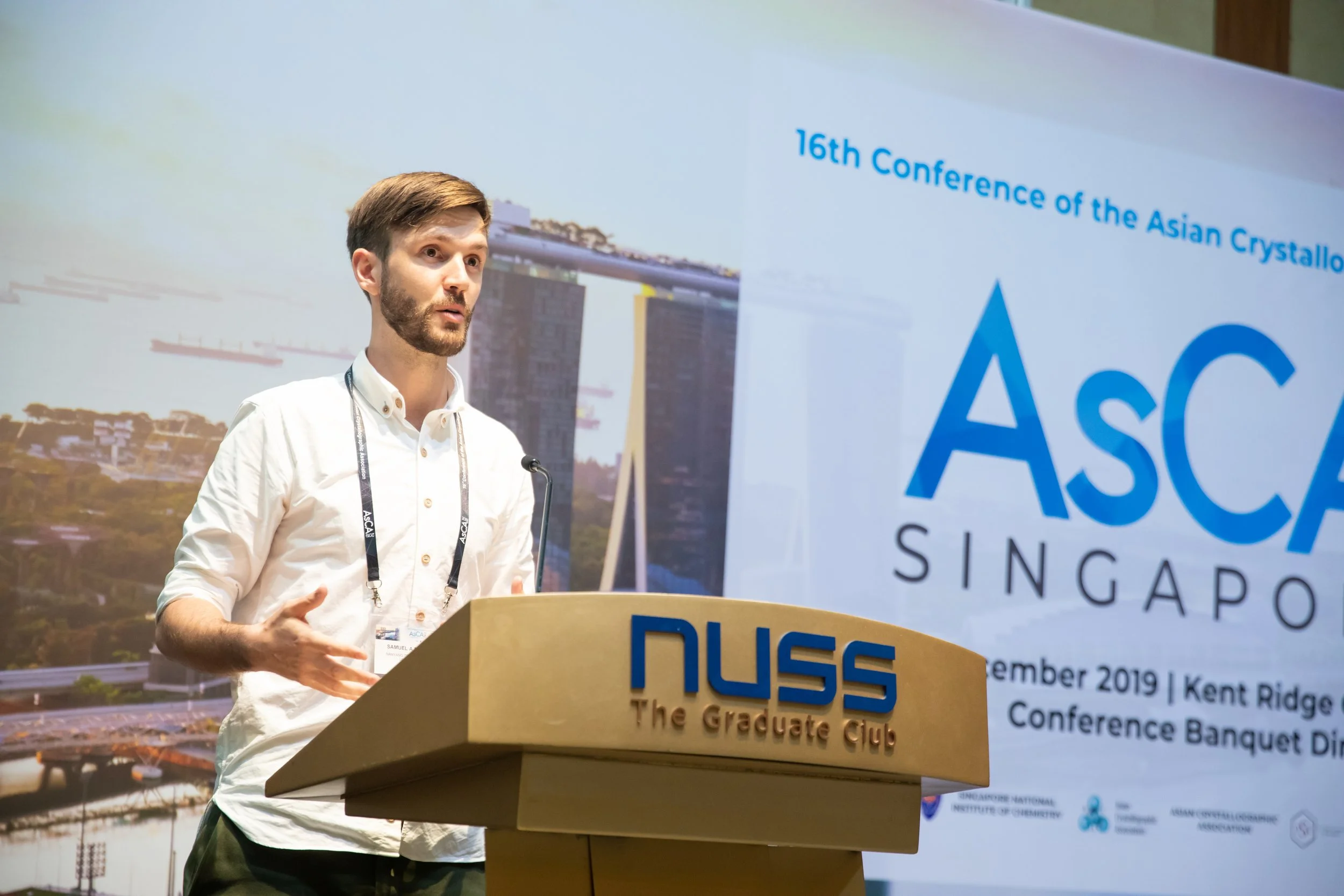
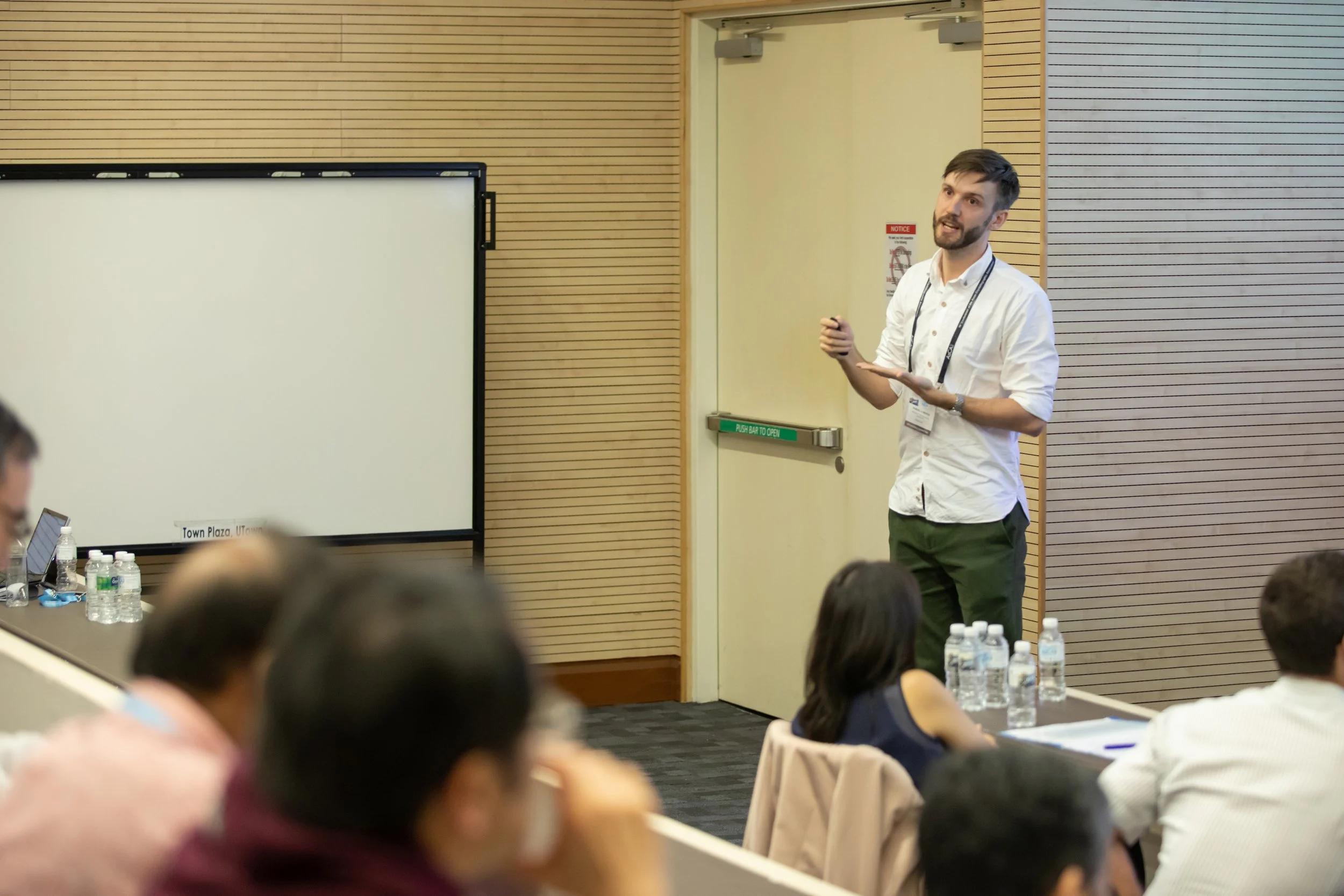
Dr. Morris at the 16th Asian Crystallography Conference, Singapore, 2019
Our lead diffraction specialist, Samuel Morris, PhD, has over 15 years experience in X-ray diffraction, has published over 25 peer reviewed papers and patents, and sits on the Asian Crystallographic Association (AsCA) Committee as representative for Singapore.
Dr Morris has deep knowledge and insight in clay materials and oxides from his PhD at the University of St Andrews, UK, before spending considerable time at Nanyang Technological University in the Materials Science and Engineering Department covering batteries, solar cells, waste materials, catalysts and small organic molecules.
He is well-known crystallographer and has deep knowledge of both powder and single crystal X-ray diffraction. Having given many workshops and lectures internationally, he thoroughly enjoys teaching and readily shares his knowledge in the field.
Our Clients

X-ray Vision Australia
Want to get in touch? We’d love to set up a call